



RESUMEN
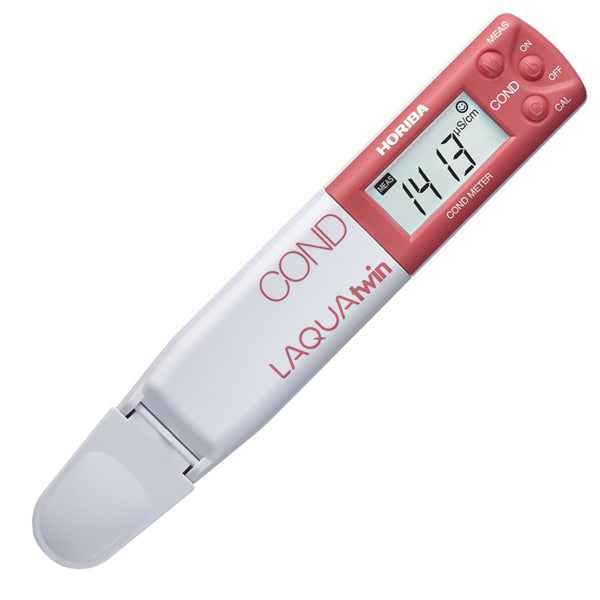
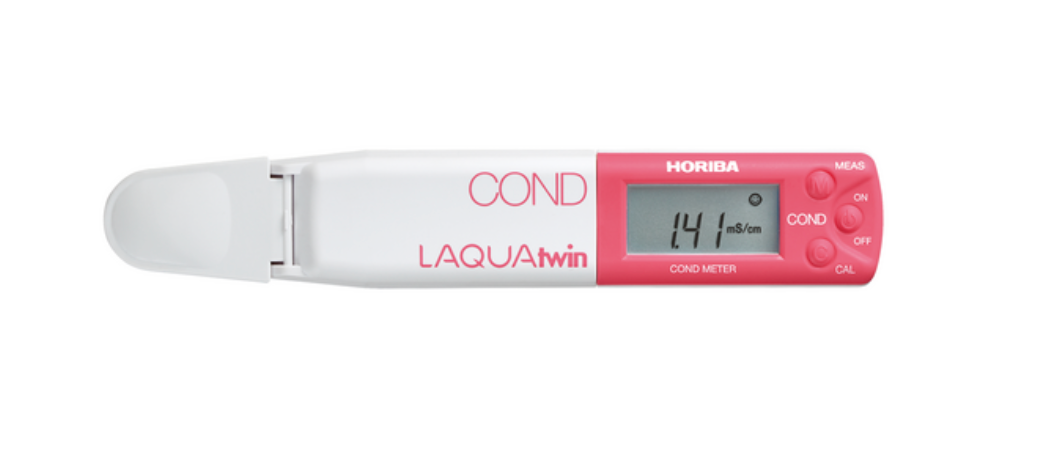
Este medidor de conductividad eléctrica compacto mide la conductividad eléctrica. a partir de un volumen de muestra de solo 0,12 mL aplicando la muestra directamente a su sensor plano.
También proporciona una conversión conveniente de sólidos disueltos totales (TDS) y Permite realizar mediciones rápidas y fiables en un formato compacto y portátil.
Es útil para analizar agua de lluvia, ríos, lagos, agua de acuario y suelo. extractos, soluciones nutritivas hidropónicas y condiciones de salinidad agrícola.
CARACTERÍSTICAS
- Mide la conductividad eléctrica a partir de tan solo 0,12 ml de muestra.
- Amplio rango de medición de CE de 0 a 199,9 mS/cm.
- Visualización de conversión de TDS de 0,0 a 9900 ppm
- Cambio automático de rango de medición
- Hasta tres puntos de calibración
- Reconocimiento automático de soluciones estándar de 1,41, 12,9 y 111,8 mS/cm.
- Compensación automática de temperatura
- Conversión de temperatura a 25 °C con un coeficiente fijo del 2 %.
- Función de ajuste del sensor de temperatura
- Función de retención automática
- Función de estabilidad automática
- Modos y factores de conversión de TDS seleccionables
- LCD digital monocromo retroiluminado
- Apagado automático después de 30 minutos.
- Indicador de nivel de batería restante
- Construcción resistente al agua con clasificación IP67
- Sensor reemplazable
- Estuche de almacenamiento portátil y accesorios de medición incluidos.
MÉTODOS DE MUESTREO VERSÁTILES
El diseño de sensor plano de LAQUAtwin permite aplicar o recoger muestras en varias formas convenientes. Elija el método que mejor se adapte a la muestra y propósito de medición.
Medición directa de gotas
Aplique una muestra líquida directamente al sensor plano con un gotero, jeringa o pipeta. El EC-33B requiere solo 0,12 mL o más para medición.

Medición por inmersión
Para muestras líquidas en un vaso de precipitados o recipiente, el sensor puede ser sumergido directamente en la muestra. Abra la tapa deslizante del sensor. guardar antes de medir.

Muestreo de cucharadas
El protector del sensor se puede utilizar para recoger una muestra de líquido directamente de agua de lluvia, un río, lago, acuario, tanque, solución nutritiva u otro Ubicación de la toma de muestras para facilitar la medición in situ.

Muestras sólidas húmedas
Las muestras sólidas húmedas, como alimentos o materiales vegetales, se pueden cortar en piezas pequeñas y colocadas sobre el sensor plano cuando haya suficiente líquido hace contacto con el electrodo.

Muestras de polvo
Coloque la muestra de polvo sobre el sensor plano y agregue una cantidad fija de agua pura antes de la medición. Conservar las cantidades de muestra y agua. consistente al comparar los resultados.

Muestras de papel, textiles y láminas.
Corte la muestra en trozos pequeños, colóquelos sobre el sensor plano y agregar una cantidad fija de agua pura para medir los componentes solubles extraído del material.

PRESUPUESTO
| Modelo | LAQUAtwin-EC-33B |
|---|---|
| Principio de medición | Método de corriente alterna bipolar de dos electrodos |
| Volumen de muestra requerido | 0,12 ml o más |
| Rango de medición |
Conductividad eléctrica: de 0 a 199,9 mS/cm Conductividad eléctrica: de 0 a 19,9 S/m Conversión de TDS: 0,0 a 9900 ppm |
| Resolución |
De 0 a 199 μS/cm: 1 μS/cm 200 a 1999 μS/cm: 1 μS/cm 2,00 a 19,99 mS/cm: 0,01 mS/cm De 20,0 a 199,9 mS/cm: 0,1 mS/cm |
| Rango/resolución de visualización de temperatura | 0 a 50 °C/0,1 °C |
| Calibración | Hasta 3 puntos*1 |
| Exactitud |
Rangos de medición de 1 a 3: ±2% F.S. Rango de medición 4: ±5% F.S.*2 |
| Funciones principales |
Cambio automático de rango de medición Reconocimiento automático de 1,41 mS/cm, 12.9 mS/cm, y soluciones estándar de 111,8 mS/cm Compensación automática de temperatura hasta 25 °C. con un coeficiente fijo de 2 %/°C Función de ajuste del sensor de temperatura Retención automática Función de estabilidad automática Apagado automático después de 30 minutos. Indicador de nivel de batería restante Sensor reemplazable Métodos de conversión de TDS: factor ajustable de 0,4 a 1,0, 442, NaCl y EN 27888 |
| Resistencia al agua | Equivalente a IP67*3 |
| Mostrar | Pantalla LCD digital monocromática personalizada con retroiluminación |
| Entorno operativo | De 5 a 40 °C, 85 % de humedad relativa o menos, sin condensación. |
| Fuente de alimentación | Dos pilas de litio tipo botón CR2032 de 3 V |
| Duración de la batería | Aproximadamente 400 horas de uso continuo con la retroiluminación apagado*4 |
| Material principal | resina ABS |
| Dimensiones y peso |
W164 × H29 × D20 mm, excluyendo las partes sobresalientes Aproximadamente 50 g, sin incluir las pilas. |
| Accesorios incluidos |
Sensor de conductividad S070 Dos pilas de litio tipo botón CR2032 Un gotero Manual de instrucciones Manual rápido Estuche de almacenamiento solución estándar de conductividad de 1,41 mS/cm, 14 ml × 1 botella*5 Solución acondicionadora, 14 ml × 1 botella |
| Consumibles principales |
S070: Sensor de conductividad 514-20: Solución de acondicionamiento 514-22: Solución estándar de conductividad de 1,41 mS/cm 514-23: Solución estándar de conductividad de 12,9 mS/cm |
*1 El medidor reconoce automáticamente 1,41 mS/cm, 12,9 mS/cm y Soluciones estándar de 111,8 mS/cm.
*2 Indica repetibilidad cuando se mide la misma solución estándar después de calibración con esa solución estándar. Error en la solución estándar. y no se incluyen errores de redondeo de ±1 dígito.
*3 Equivalente a IP67. El medidor no fallará después de la inmersión en agua a una Profundidad de 1 m durante 30 minutos. No se puede utilizar bajo el agua.
*4 La duración de la batería se reduce aproximadamente a un tercio cuando la retroiluminación está encendida. Usado. La retroiluminación permanece encendida durante aproximadamente 20 segundos.
*5 La solución estándar de 12,9 mS/cm requerida para la calibración de dos puntos es Se vende por separado. Para la calibración de tres puntos, prepare una solución de potasio 1 mol/L. solución acuosa de cloruro.
Notas de conversión de TDS
El valor de TDS se calcula a partir de la conductividad eléctrica medida. utilizando la configuración de conversión seleccionada. No es una medición directa. de la masa seca de sólidos disueltos.
Las opciones de conversión disponibles incluyen un factor seleccionable por el usuario. De 0,4 a 1,0, así como los modos 442, NaCl y EN27888.
Al comparar los resultados de TDS, utilice la misma configuración de conversión, condiciones de temperatura y método de preparación de la muestra.